
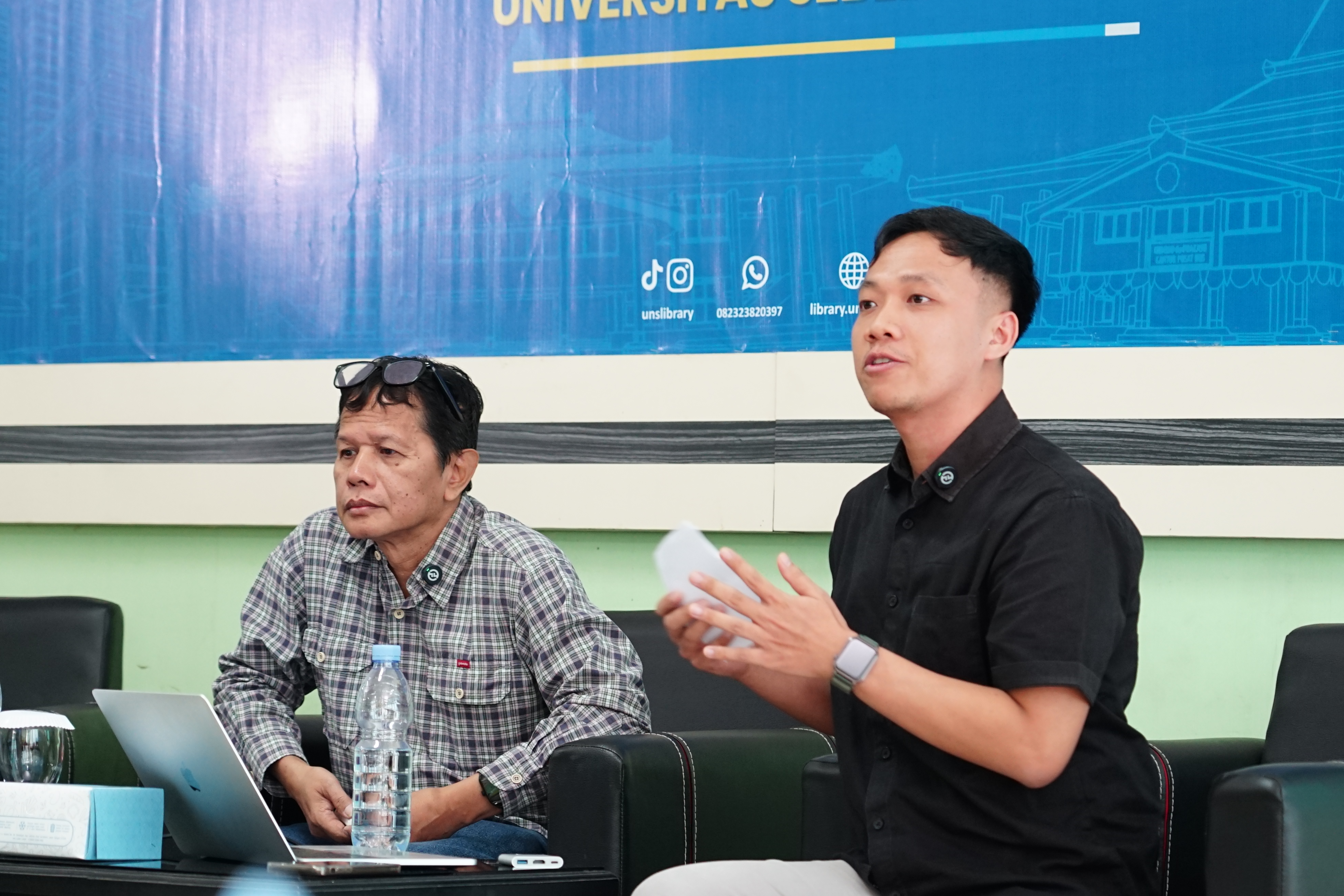
Writing Well, Publishing Right: My Experience at UNS International Short Course
Surakarta, April 2026 - Some events you attend simply to fulfill a schedule. Others leave you genuinely energized. The International Short Course on Effective Scientific Writing and Publication Strategies toward SDG 4 & SDG 17, hosted by the UPT Library of Universitas Sebelas Maret (UNS) on April 27–29, 2026, was firmly the latter.

I had the privilege of being part of this three-day hybrid event in two capacities: as a moderator and as a facilitator for the afternoon workshop session on Day Three — and both roles reminded me of just how much the academic community genuinely hungers for honest, practical conversations about writing and publishing.
A Room Full of People Who Actually Want to Get Better
Before I get into what we covered, let me paint you a picture of who was in the room — or rather, the rooms, both physical and virtual. A total of 182 participants joined from nine countries: Indonesia, Malaysia, Pakistan, Syria, Cambodia, Timor-Leste, Ghana, Tanzania, and the Philippines. Students, lecturers, researchers, librarians — all in one space, all there for the same reason: to become sharper, more credible academic writers and publishers.
That diversity alone made the energy in every session electric. When someone from Tanzania and someone from Cambodia are asking the same questions about journal ethics, you realize these are not local problems. They are universal ones.
My Session: Effective & Ethical Writing in Practice
The afternoon workshop I facilitated was titled "Effective and Ethics in Writing," and I designed it to be as practical and honest as possible — because frankly, the academic publishing world can be a minefield, and researchers deserve a clear map.

Here is what we unpacked together:
Firstly, Best Practices in Journal Searching. We started with something deceptively simple: how do you actually find the right journal for your work? I walked participants through practical strategies for navigating databases, reading journal scope and aims critically, checking indexing status, and — crucially — spotting the red flags of predatory journals before it is too late. This is a skill that surprisingly few graduate programs teach explicitly, yet it can make or break a researcher's publication journey.
Secondly, Real Cases of Ethical Violations — and How to Handle Them. This was the part of the session that sparked the most discussion, and I expected as much. We looked at real-world cases: plagiarism, duplicate submission, authorship disputes, data fabrication, and the murky grey areas that often go undiscussed in formal settings. More importantly, we talked about what to do when these things happen — how to respond, how to report, and how to protect your integrity as a researcher. The room got very candid very quickly, and that is exactly the kind of conversation academic spaces need more of.
Thirdly, Ethical AI Use in Research. No academic workshop in 2026 is complete without addressing the elephant in the room: artificial intelligence. Rather than taking a fearful or dismissive stance, we approached it practically. How can AI tools genuinely assist your research and writing process? Where are the ethical boundaries? What counts as misuse, and what does responsible, transparent AI use actually look like in a manuscript? We worked through concrete scenarios, and I was impressed by how thoughtfully participants engaged with the nuances — because the nuances are real and they matter.
Lastly, Responding to Reviewers. Last but absolutely not least, we covered something that sends a quiet panic through even seasoned researchers: the reviewer response letter. I shared a practical framework for reading reviewer comments constructively, structuring your response professionally, and — yes — how to respectfully push back when you genuinely disagree with a reviewer's point. This is a craft that rarely gets taught, yet it is one of the most decisive factors in whether a paper gets accepted or rejected after revision.
Why These Conversations Matter
The broader context of this short course — supporting SDG 4 (Quality Education) and SDG 17 (Partnerships for the Goals) — is not just institutional branding. It reflects something real. When researchers from nine different countries sit together to sharpen their writing and publishing skills, knowledge stops being a privilege concentrated in well-resourced institutions. It begins to circulate more freely, more fairly.
That is the version of academic publishing I want to be part of.
A Closing Thought
To every participant who showed up, asked uncomfortable questions, challenged assumptions in the workshop, and stayed genuinely curious across three full days — thank you. You are the reason facilitating sessions like this feels worthwhile.
To UPT Perpustakaan UNS and the entire organizing team: well done for building a forum that was substantive, inclusive, and genuinely international in spirit.
Until the next one.
Heads up: this post was adapted from an article originally published on the UPT Library UNS website. I used AI to help edit and reshape the writing — but everything here has been read through, fact-checked, and approved by me personally.
Leave a comment